Wednesday, April 29, 2015

Thursday, February 19, 2015
IGNORE The Expiration Dates- Use Common Sense Instead

THE adherence to food expiration dates has long been a heated discussion in my home. I have vehemently pushed against this for years. I have never been a fan of the arbitrary "expiration dates" on my food. Even though the FDA requires dates be added on all food product, the dating, itself, is not regulated. Regardless of the wording, "Best By", "Use Or Freeze By", "Sell By", etc., putting a date on food products is simply the food processors taking advantage of the sensibilities of an easily manipulated mass market. According to the manufacturers, these terms are indicators of food QUALITY, not safety. The key concern is the widely held misconception by the consumer that these dates are safety related, and since it is that misconception that fattens the wallets of food manufacturers, they are in no hurry to change that perception.

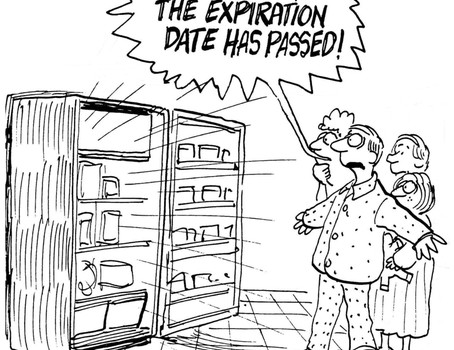 Even with my upbringing, and my tendencies toward frugality, the most aggressive argument I have ever made in regards to this issue is simply the fact that FOOD EXPIRATION DATES ARE MARKETING TOOLS! I have always firmly believed that the easiest way for the food industry to manipulate increased sales is to make people think that their food magically goes rancid, toxic, deadly, etc. as soon as you reach the date on the label. There are many variables that can alter the quality and longevity of the food, all of which will impact the length of time the food may be safe to eat. So, with no thought given to the method of storage, the temperature variations during transport, the average storage room temperature, or the altitude of the home (or store) where the food is kept for use, people are prone to simply toss their perfectly good food in the trash as soon as the date stamp has passed.
Why has this become the norm?
When did we become so nonchalant about wasting perfectly good food?
Have we become so completely desensitized to the amount of excess we create that we have convinced ourselves that even the basic necessities are now as disposable as a spent battery or a broken appliance?
 So... How Long Are Foods REALLY Safe To Eat?!
IGNORE the date- USE COMMON SENSE (and your senses)!
Look at it, Smell it, Feel it, Taste it
Here are some basic and common food items and what to look out for:
Milk- if the milk smells sour or has curdled, toss it
Eggs- drop in a glass of water- if it sinks, it's safe; if it floats, toss it out
Fresh Meat- if it is slimy or smells "ripe", it needs to go
Deli Meat- watch out for discoloration or slimy feel
Fresh Seafood- should not smell 'fishy", eyes should not be cloudy
Fresh Fruit- bruised fruit is still good to eat (or use in smoothies), throw out moldy fruit
Canned Goods- current canning techniques make cans last for years- beware of dents and bulges
Fresh Bread- will start to grow mold after 3-5 days, can freeze for months with no loss of quality
Processed Bread- some will last for weeks without showing any sign of decay (really?!?)
Pasta- because it is a dry item, it can last for months beyond the date- beware of funny smells
Bottled Water- lasts indefinitely- HOWEVER- plastic bottles will leach chemicals into the water
Packaged Greens- will look wilted after a week in the fridge, drop in an ice water bath to refresh it
Potato Chips- will last for months beyond the date, watch for a fowl smell or excess oil buildup
Hard Cheese- look for discolorations and mold spots- pick them out and the cheese is still good
If stored properly, or frozen, these foods can last long beyond their advertised marketing dates. There is a plethora of information available on the web, and with just a few minutes of research, you will have all of the information you need to maximize your food storage. Once you stop tossing food in the trash, you will also reap huge benefits in your wallet as you see how much money you are bound to save.

Cheers,
-Evan
#TakeBackControl
Join Us On Facebook!
Check Us Out On Pinterest!
Sunday, February 1, 2015
January 2015- Changes Recap
When Jennifer and I looked back at 2014 and realized how many changes we had made toward our own personal growth and our health, we were awestruck. We hadn't realized, until we wrote everything down (LINK to original post) just how many things we had changed, how much we changed our attitudes, and how much closer we grew together as a couple. After sharing this information with our friends on Facebook, we were blown away at the response as our friends were using our post as inspiration to kickstart their own journey into better health.

 Let's take a look at what changes Jennifer and I have made in the last 30 days alone- These are new things we have done since the creation of the original list from November, 2014. I have added links throughout so you can research options for yourself and possibly be inspired:
Group Related-
- Motivated by our friends who were inspired by our original post, we created the Facebook group Take Back Control Of Your Life.
- Created this blog to support the Facebook group and have an ability to preserve articles and create original content for our members.
- Created a Pinterest page to support the group as well. This Pinterest page is designed to help archive so many of the memes and pictures that motivate our members every day.
- Watched a number of food related / health related documentaries to support our knowledge of the industry, make more informed choices, and assist with questions that arise from the members of the group- Farmageddon (2011), Fat, Sick, and Nearly Dead (2010), Fat, Sick, and Nearly Dead 2 (2014), Fed Up (2014), Food Matters (2008), Food, Inc (2008), GMO OMG (2014),
- Visited a local-area farm in the North Georgia Mountains to purchase some farm fresh meat and dairy
- Switched from chemical based coffee creamers to heavy cream and natural sugar (Evan)
- Have eaten less than 1 processed, frozen meal per week in over 30 days (Both)
- Began drinking green smoothies for lunch or dinner at least 3 days a week (Both)
- Visited local smoothie bar for local, organic, non-GMO smoothies (Both)
- Began a local, organic produce subscription delivery- delivered every 2 weeks (Household)
- Visited a local spice shop to continue to support local business, and explore taste options (Both)
- Checked out 2 small, non-GMO, healthy grocery stores that we haven't previously been to- Sprouts and Goodness Grocery (Both)
- Monthly shopping at local, organic health food grocery- Life Grocery (Jennifer)
- Visited at least 3 new (to us), locally-owned, health focused restaurants while eating out (Both)

- Switched from national brand cartridge razor to a single-blade, old school style razor and blades (Evan) [2 year cost-$45 vs. $205 - massive cost savings over the course of a 2-year period + stop paying ridiculous prices for shaving supplies to major corporations]
- Switched from nationally branded toothpaste to a more natural option- Jason / Tom's (Jennifer)
- Switched to a natural bar soap sourced from local vendors or Dr. Bronners (Jennifer)
- Switched to a natural deodorant- Tom's, Jason (Jennifer)
- Started the switch to natural cosmetics (Jennifer)
- Returned to performing improv on a weekly basis (Evan)
- Began taking yoga classes at least 3 days per week (Jennifer)
- Massages, every 3 weeks at Massage On The Square, Marietta, GA (Both)
- Began walking OUTDOORS (30 minutes) at least 4 days per week (Evan)
- Switched to an essential oil diffuser instead of chemical laden air fresheners (Both)
- Ordered essential oil diffusers for our vehicles (Both)
- Switched from a traditional alarm clock to a light-based alarm clock app (Android) that wakes you more naturally with increased light levels instead of loud, blaring sounds. (Jennifer)


We welcome your comments and insights. We would especially love to hear from you if you feel inspired by the changes we have made for ourselves. Please join us on Facebook and Pinterest, join in the conversation, and share our pages with your friends and family.
Thanks for reading,
Evan & Jennifer
The Inspiration For Our Better Lifestyle- Nov. 2014
2014 has been an interesting year for Jennifer and I as we have steadily increased our understanding of the poisons we have been ingesting intentionally (food we eat) and unintentionally (cleaning products we use). While, at times, it has been a challenge, It has truly been a year of discovery, transition, personal growth, and compromise as we focus more and more on investing into a higher quality of life for the future. Without a doubt, this growth has brought us even closer together.
I invite our friends to join us through 2015 as we continue working on making better choices, putting self first, doing research into the truth behind the hype, and ignoring the brainwash marketing that has permeated our lives for so long. Knowing that it takes 6 weeks to develop a habit, NOW would be the time to start considering the changes that will lead to better options. This is not a new year resolution... this is a new life decision, and one that is 100% up to you. This isn't about false accountability to keep you 'on track'; this is more about a sense of community to ask questions, feel better, and feel supported on making a paradigm shift for your life.
Here are the changes we initiated for ourselves, slowly throughout 2014, as we unconsciously started to invest in ourselves for the future:
~ Research, research, research across multiple sources to understand the available options when making life decisions (no single source is valuable on its own- information must be gathered and culled)
~ Make large meals / freeze leftovers INSTEAD of buying processed frozen meals
~ Prepare meals for the week that can be frozen and used in lieu of buying prepared foods
~ Use natural bar soap INSTEAD of body wash
~ Use a natural hand soap (or make one)
~ Make natural cleaning products INSTEAD of buying off the shelf
~ Seek out confirmed organic product when available
~ Made changes to our kitchen and added a prep table to make meal creation easier (we LOVE IKEA)
~ Use the crock pot to make homemade pasta sauces
~ Make our own fresh nut butters (using the Ninja)
~ Make more smoothies / green drinks (Ninja)
~ Drink water / infused water INSTEAD of soda or juice
~ Eat 2 salads per week for lunches
~ Mix our own flavored cream cheeses INSTEAD of buying off the shelf
~ Mix our own compound butters to showcase enhanced flavors for home cooking
~ Use the stove / oven / toaster oven at least 5x to each use of the microwave
~ Seek out natural cures for ailments (turmeric, clove, mint, ginger, etc)
~ Buy food that goes bad INSTEAD of food that is processed to last for weeks
~ Buy local produce when available (farmer's market, whole foods, etc)
~ Eat more often at locally owned restaurants INSTEAD of national chains
~ Experience cuisines from different parts of the world to expand our palettes
~ Monthly massages
I am sure there are more... and I am sure Jennifer will help me add more as we think of them.
In addition to continuing what we started in 2014, for 2015, we are planning a few things, some of which are already underway:
~ Improved focus on health (gym time)
~ Experiment with natural deodorants INSTEAD of aluminum based options
~ Yoga classes (Jennifer)
~ Mental calming (Improv for me / return to meditation for Jennifer)
~ Purchase a new bed to improve sleep / relaxation (expensive, but consider it a 20 year investment for better health)
~ Vacation planned to Colorado to research possible relocation
~ 30-60 minute daily walks (outside)
~ Cut processed sugar intake by 50%
~ Shop at grocery stores that feature locally sourced food and expanded produce sections (SPROUTS)
~ Shop / explore more Farmer's markets
~ Shop / explore local farms for FRESH foods (while also supporting small, local farmers)
This is not going to be easy... but slow, steady growth throughout the year will make it manageable.
Thursday, January 15, 2015
Chicken Labeling At The Supermarket
From Air-Chilled to All-Natural: Understanding Chicken Labels at the Supermarket

Supermarkets used to only sell one or two types of chicken, but these days, the options available when buying whole chicken or chicken parts are overwhelming. Chickens are labeled with little explanation or clarity for the home cook. What exactly do terms like “natural,” “organic,” and “air-chilled” really mean?
Many claims cited on chicken packaging have no government regulation, while those that do are often poorly enforced. Here’s how to evaluate which claims are meaningful—and which are full of loopholes or empty hype.
 USDA Organic
The seal “USDA Organic” is considered the gold standard for organic labeling. This label ensures that chicken eat organic feed that doesn't contain animal byproducts, are raised without antibiotics, and have access to the outdoors (how much access, however, isn't regulated).

Air-Chilled
“Air-chilled” means that chickens were not water-chilled en masse in a chlorinated bath and the meat did not absorb any water during processing. (Water-chilled birds can retain up to 14 percent water—which must be printed on the label—diluting flavor and inflating cost.) Instead, individual chickens hang from a conveyor belt and circulate around a cold room.
 Raised Without Antibiotics
“Raised without antibiotics” and other claims regarding antibiotic use are important; too bad they’re not strictly enforced. (The only rigorous enforcement is when the claim is subject to the USDA Organic seal.) Loopholes seem rife, like injecting the eggs—not the chickens—with antibiotics or feeding them feather meal laced with residual antibiotics from treated birds.
 Natural and All Natural
Beware the ubiquitous “natural” and “all natural” food labels. In actuality, the USDA has defined the term just for fresh meat, stipulating only that no synthetic substances have been added to the cut. Producers may thus raise their chickens under the most unnatural circumstances on the most unnatural diets, inject birds with broth during processing, and still put the claim on their packaging.
 Vegetarian-Fed and Vegetarian Diet
“Vegetarian-fed” and “vegetarian diet” sound healthy, but are they? Since such terms aren’t regulated by the government, you’re relying on the producer’s notion of the claim, which may mean feeding chickens cheap “vegetarian” bakery leftovers. The winners of our whole chicken tasting assured us that their definitions mean a diet consisting of corn and soy.
 Hormone-Free
When used with chicken (and pork) “hormone-free” is an empty reassurance, since the USDA does not allow the use of hormones or steroids in the production of either chicken or pork.
Want more tips like these? In the Chicken Purchasing and Prep course from the America’s Test Kitchen Online Cooking School, you’ll learn about chicken labeling, as what to look for when buying whole chickens or chicken parts. You’ll review how best to prepare chicken for cooking, and we've included a comprehensive guide to food safety and cleanup as well.
Saturday, January 10, 2015
The Vita'myth'

Ideally, we should be getting all of the vitamins and nutrients from the foods we eat, however, with the way we have been conditioned to prepare our food, most of us have needed to supplement those missing nutrients for years. Every time we heat up our food, it loses some of its beneficial properties. When we microwave that food, it essentially destroys whatever health benefits the food formally had. If that wasn't bad enough, the industrial processing of these foods prior to hitting the shelf of our grocery store has already started the destruction, and we only make it worse with our end-user preparation.

Whether you pop a multivitamin daily or you religiously swallow a whole cluster of vitamins that range from A to zinc, there’s no denying that there’s a lot of misinformation surrounding these little pills. If you do a web search for information on vitamins, you will find a wide range of information running the full spectrum from "you must add these to your diet" to "avoid at all costs". When you ask your doctor about the benefits of vitamin and mineral supplements, most of them will skirt away from the conversation at all costs, almost to the level of suspicious denial. In my most humble opinion, most of the "studies" that you read that tell you to stay away from vitamins need to be tempered with a heavy level of skepticism. Remember, these studies are often completed by the very same medical community and pharmaceutical industry that has a lot to lose when the general public begins to learn the truth, makes better food choices, and ultimately becomes significantly healthier.
What brand should I choose?
 The vast selection of vitamins and mineral supplements you see at your local grocery store is simply mind boggling. You could easily stare at the display for an hour and ultimately walk away frustrated after giving up. As if the varied vitamin choices weren't intimidating enough, there are often 3 or 4 brands of these vitamins staring you in the face as well. How do you choose? My suggestion... WALK AWAY!! Because the entire supplement industry is largely self-regulated, the claims found on the bottles is nothing more than flash, designed to draw you in, and have you spend your money. The real issue here is the fact that it is impossible to know the purity of these supplements. In a perfect world, these companies would not only have to disclose how much of their formula is filler product, but would also supply information about the farming, harvesting, and processing habits of these items. There are many companies out there who are as much about education as they are about business, and work to empower the public to make the best decisions for themselves. Our personal favorite for this is Garden Of Life. The biggest thing that drew us to them in the first place, after doing exhausting research, is the fact that their multivitamin is a whole food / raw food vitamin, providing you with not only the purest of ingredients, but with the highest level of vitamins and nutrients possible shy of eating the raw foods yourself.
So many vitamins to choose from-
As to the specifics of what vitamins you should be consuming, that depends entirely on your dietary habits and your health. Each of these are designed to enhance or supplement specific dietary needs. The best advice may be to seek out the assistance of a dietitian or nutritionist. Try what works for you, and know that taking these supplements should only be a short-term stop gap on your journey to better health and better food choices, so you you won't need to rely on a pill to get the nutrition that our bodies crave to do the job they were intended to do. This is a marathon, take the first step, and Take Back Control Of Your Life!
Cheers,
-=\E/=-
Wednesday, January 7, 2015
Supermarket Fuel Points
Maximizing Your Supermarket Fuel Points
Save $1.00/gallon (or more) on EVERY fill-up
Supermarket fuel points are a great little perk being offered by many chains across the country as a nominal "bribe" to get you to visit them more often and spend your grocery money there. These perks (like most reward programs) are really more fluff than substance, and most often created to benefit the sponsor of the reward program more than the end user...
UNLESS YOU KNOW HOW TO WORK THE SYSTEM

How Does It Work?:
First, let's get a general understanding about these programs- The details I present here are specific to Kroger, since that is the program I am most familiar with (this is a generalized overview, since every fuel point program is individual, and may include extra details, restrictions, etc. that are not covered in this article).
- Earn 1 point for every $1 you spend in the grocery store
- Redeem 100 points for $.10/gallon savings
- Maximum $1.00/gallon savings per fill-up
- Maximum 35 gallons per fill-up
- Points expire at the end of the month after they are earned (Jan points expire end of Feb)
 Based upon the details above, we see that, in order to maximize your fuel savings, you would need to spend $1,000 in order to save $1.00 per gallon (1.0%). With the maximum redemption of 35 gallons, that equates to a maximum savings of $35 for $1,000 in purchases (3.5%). These days, most vehicles have gas tanks of less than 20 gallons, and most of those people don't wait until they are limping in with an empty gas tank to fill up, effectively destroying any real benefit the program makes you think you have earned.
When you look at what you are actually saving compared to how much you have purchased, the numbers make you wonder why you were excited about the program in the first place.
To break down the actual savings by percent:
1,000 in purchases, equates to $1.00/gallon savings (1% overall rebate)
35 Gallons (max)- 3.5%
30 Gallons- 3.0%
25 Gallons- 2.5%
20 Gallons- 2.0%
15 Gallons- 1.5%
10 Gallons- 1.0% (average fuel fill-up amount)
It's all about the marketing:
Grocery chains love to advertise this program and the $1.00/gallon savings because people will perk up and listen, especially in times when gas prices are creeping back up. The perception of the savings is far away above the actual savings you receive. As evidenced in the examples above, the actual savings is pitifully low as compared to your investment. Of course, those of us who share our discounted fuel price on social media are also adding 'fuel to the fire', which is essentially more free advertising for the chain. Like so many other rewards programs, if the host of the program would advertise the actual "real-life" savings you could expect to receive, most people would never bother signing up in the first place.

Making the program work for you:
The real secret to savings here is in the gift cards. In fact, if you do it right, you can maximize your normal monthly spending habits by adding fuel discounts to the mix. Where we shop, gift cards are almost always credited as double fuel points. In other words, $100 in gift cards would be the same as spending $200 on groceries, effectively and instantly doubling the savings you receive. A few times per year, the gift card bonus skyrockets to 4x, bringing you the best bang for your buck. That 4x fuel times bonus becomes the perfect time to purchase extra gift cards for upcoming gift giving or stockpiling a supply for later.
Here is where the fun begins:
Take a look at your monthly spending commitments and see which of those can be replaced by gift cards. Do you pay Netflix every month? How about Hulu? Do you go to Starbucks every morning? Do you shop at Target? Amazon? JC Penney? Do you eat out at chain restaurants like Fridays? Applebees? Instead of using a credit or debit card for these purchases, buy gift cards and use those instead. For example, when you buy an Amazon gift card, add it to your Amazon account, so your purchases are covered by the gift card(s). If there are gift cards available, do the same for all of the other auto-pay subscription plans that would ordinarily take money directly out of your bank account.
For retail purchases, once you know that you are going to make a purchase, go get a gift card for that store first. With a little bit of pre-planning, you quickly become a master of this program, and reap the savings without feeling trapped by having to spend a fortune in the grocery store.
Are you planning a trip? Use gift cards to budget a monthly spending allowance and have the trip (at least) partially paid well in advance.

The hidden security benefit:
With all of the credit card breaches and online hacks that have been occurring over the past few years, more and more people are finding themselves victims of identity theft or, at the very least, afraid that their credit or debit card information has been compromised. When you use gift cards to make your purchases and pay for your online commitments, you have an added level of security because your credit card information is no longer at risk. When you eat at a restaurant, and present your credit card at the end of your meal, you are at risk of an unscrupulous server stealing your card information. That risk becomes severely limited if you pay for the meal with a gift card.
Is all of this really worthwhile?:
The answer to that depends entirely upon you and your personal spending habits. It took us a little while to make the most of this, and, even after 2 years of following this method, we are still finding new gift cards we can buy and use on a monthly basis to help us save money in the long run. It only takes $500/month of gift card purchases to reach 1000 fuel points ($1.00 savings per gallon).
Using the gift cards also makes it very easy to stick to a monthly budget- When you are budgeting your monthly discretionary spending, how much do you have left to spend? If you want to make a $20 purchase and only have $8 left on a gift card, it may make it easier to hold off on that purchase until next month's gift card purchase.
Subscribe to:
Posts (Atom)